


Do you have a favorite family recipe that you can't make gluten-free because it calls for self-rising flour? No problem! While there is no commercially available gluten-free self-rising flour blend, I can teach you to make your own in just a couple of minutes using my DIY gluten-free flour blend or with your favorite 1:1 GF flour.

Save This Recipe!
Skill Level: Beginner
Shortcut Central: You can turn any 1:1 gluten free flour blend into GF self rising flour.
Allergy Watch: Dairy Free, Nut Free, No Eggs
My blend uses proper ratios-1 ½ teaspoon baking powder and ¼ teaspoon salt per cup of any 1:1 gluten-free flour blend-so you get the same lift and flavor you expect from store-bought self-rising flour without hunting down rare products.
Ingredient Notes
- Gluten-Free Flour: Use any 1:1 flour blend with xanthan gum, like Bob's Red Mill 1:1 Flour or King Arthur Measure for Measure, or add the xanthan gum separately.
- Salt: Use kosher salt.
For a DIY flour blend:
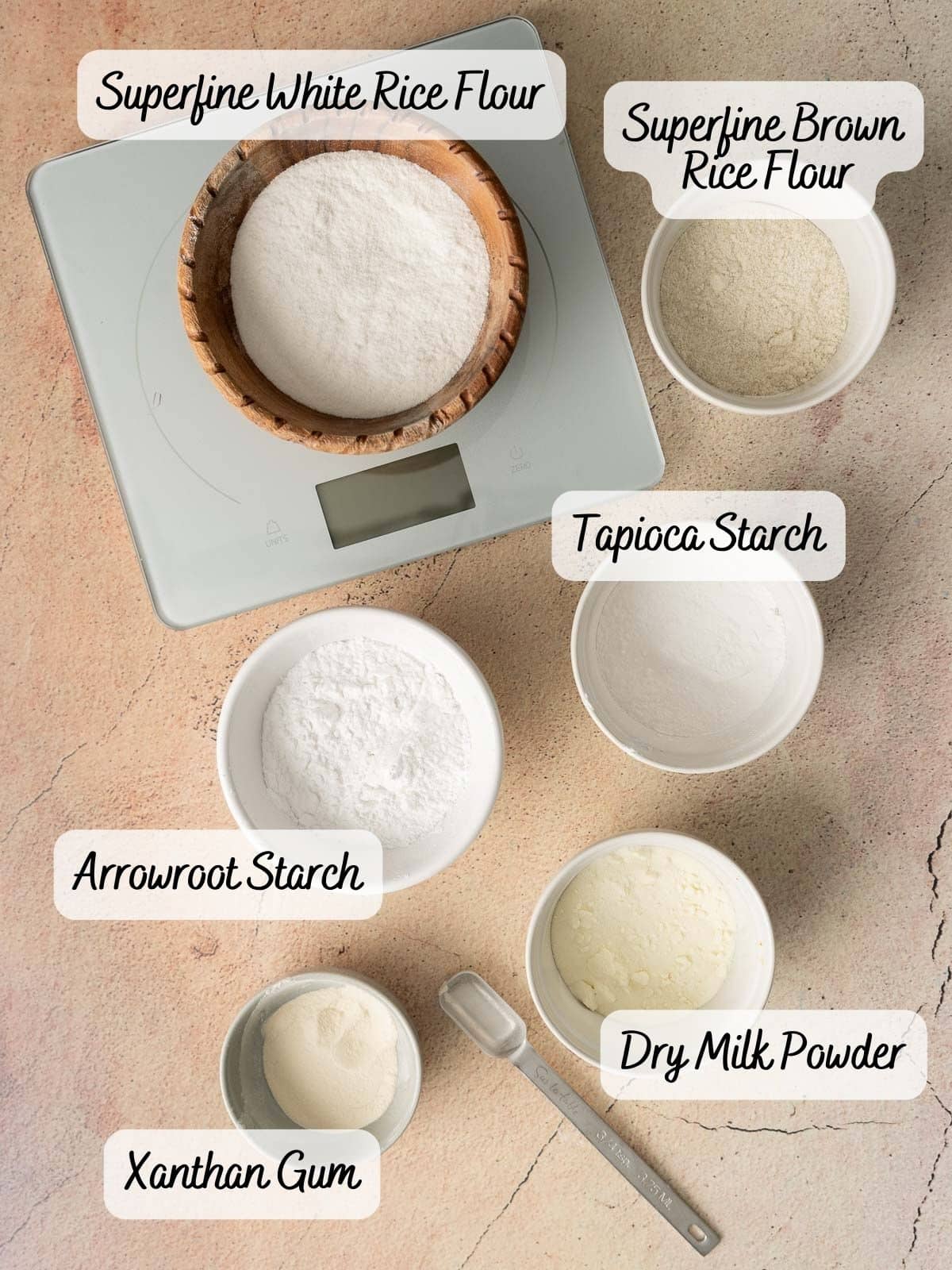
- White Rice Flour - Look for a version that is finely ground if you can find it. It will give your baked goods a finer crumb.
- Arrowroot Starch- Adds elasticity and structure without any noticeable taste. It also freezes well which is great for cookies.
- Superfine Brown Rice Flour- Look for a version that is finely ground if you can find it. I use a small amount compared to most recipes.
- Tapioca Starch - Also called tapioca flour. This ingredient provides elasticity. You can also use modified tapioca starch (Expandex).
- Nonfat Dry Milk Powder- OPTIONAL, please avoid if you are dairy-free. However, it provides protein, and protein equals structure. And it helps the bakes achieve a golden brown color.
- Xanthan Gum- Some recipes

I do NOT recommend the following flours for use in this blend:
- Any single gluten-free flour. For example, just plain white rice flour.
- Bob's Red Mill All-Purpose Baking Flour because it contains bean flour
- King Arthur Gluten Free Bread Flour because it is adapted to yeast breads
How to Make Self Rising Gluten Free Flour
A step-by-step visual guide for making gluten-free self rising flour. You can skip to the recipe for the full written instructions.

Mix
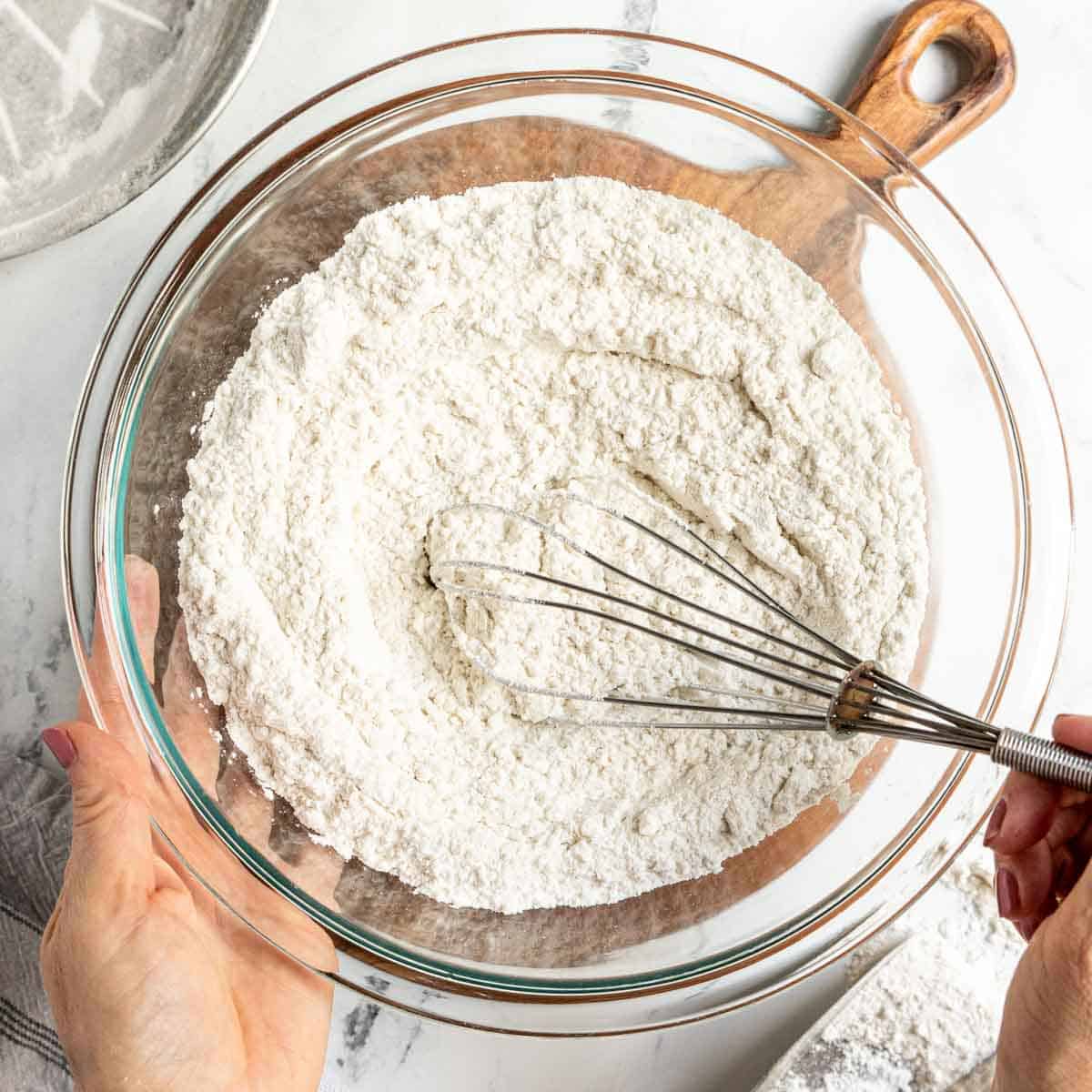
Weigh and mix the ingredients.

Sift
I use a whisk but you do need to make sure the ingredients are thoroughly mixed together.
Serious bakers will often use a food processor to ensure the ingredients are evenly incorporated.
Jen's Recipe Notes
- Ideally you should use a kitchen scale.
- When measuring flour by the cup, use a spoon to fluff it up within the container. Spoon the flour into your measuring cup. Then use a knife to level across the cup.
More Gluten Free Baking Basics
Make Ahead and Storing
Make Ahead: Blend up to 3 months in advance. Use before the baking powder expiration date.
Storing: Airtight container in a cool, dry pantry (stir before use).
Freezing: Do not freeze, as starches will clump.
📖 Recipe
Gluten-Free Self-Rising Flour
Save This Recipe!
Ingredients
- 476 grams (4 cups) 1:1 gluten-free flour with xanthan gum
- 10 grams (1 teaspoon) xanthan gum omit if your blend contains
- 19 grams (2 Tablespoon) baking powder
- 2.8 grams (1 teaspoon) kosher salt
Homemade Gluten-Free Flour Blend (makes 4 cups)
- 200 grams (1.25 cups) white rice flour fine
- 100 grams (0.8 cup) arrowroot starch
- 62.5 grams (.39 cup) brown rice flour fine
- 50 grams (.41 cup) tapioca starch also called tapioca flour
- 50 grams (.37 cup) nonfat dry milk powder omit for dairy free
- 14 grams (1.5 Tablespoon) xanthan gum
Instructions
- Whisk all the ingredients together in a large bowl476 grams 1:1 gluten-free flour with xanthan gum, 10 grams xanthan gum, 19 grams baking powder, 2.8 grams kosher salt, 200 grams white rice flour, 100 grams arrowroot starch, 62.5 grams brown rice flour, 50 grams tapioca starch, 50 grams nonfat dry milk powder, 14 grams xanthan gum
- Leftover flour should be stored in an airtight container in a dry dark place. The flour blend should be good for 3 to 6 months.
Equipment
- Airtight Storage Container
- mixing bowl
Notes
- Do not use for recipes that use yeast
Nutrition
Recipe Questions
Yes, if a recipe calls for baking soda, you do need to add it. Some recipes call for 2 rising agents, and the baking powder in the self-rising flour will not be enough.
Gluten-free flours can be dramatically different in weight. Therefore, it is recommended that you scoop your flour into a measuring cup and level it.
Self-rising flour is a product that is considered an all-in-one baking flour. Meaning it already has the leavening agent, baking powder, and salt added.
I first published this Self Rising Gluten Free Flour blend on my food blog Peel with Zeal.

Comments
No Comments